
The Mountain that Miners Washed Away
This canyon in Nevada County, California, wasn’t carved by a river.
The towering cliffs at Malakoff Diggins were created during the Gold Rush by one of the most destructive mining techniques in California history: hydraulic mining.
Beginning in the 1850s, miners used massive water cannons to blast entire hillsides apart in search of gold. High-pressure jets of water washed millions of tons of earth downstream, leaving behind the dramatic cliffs and barren landscape seen here today.
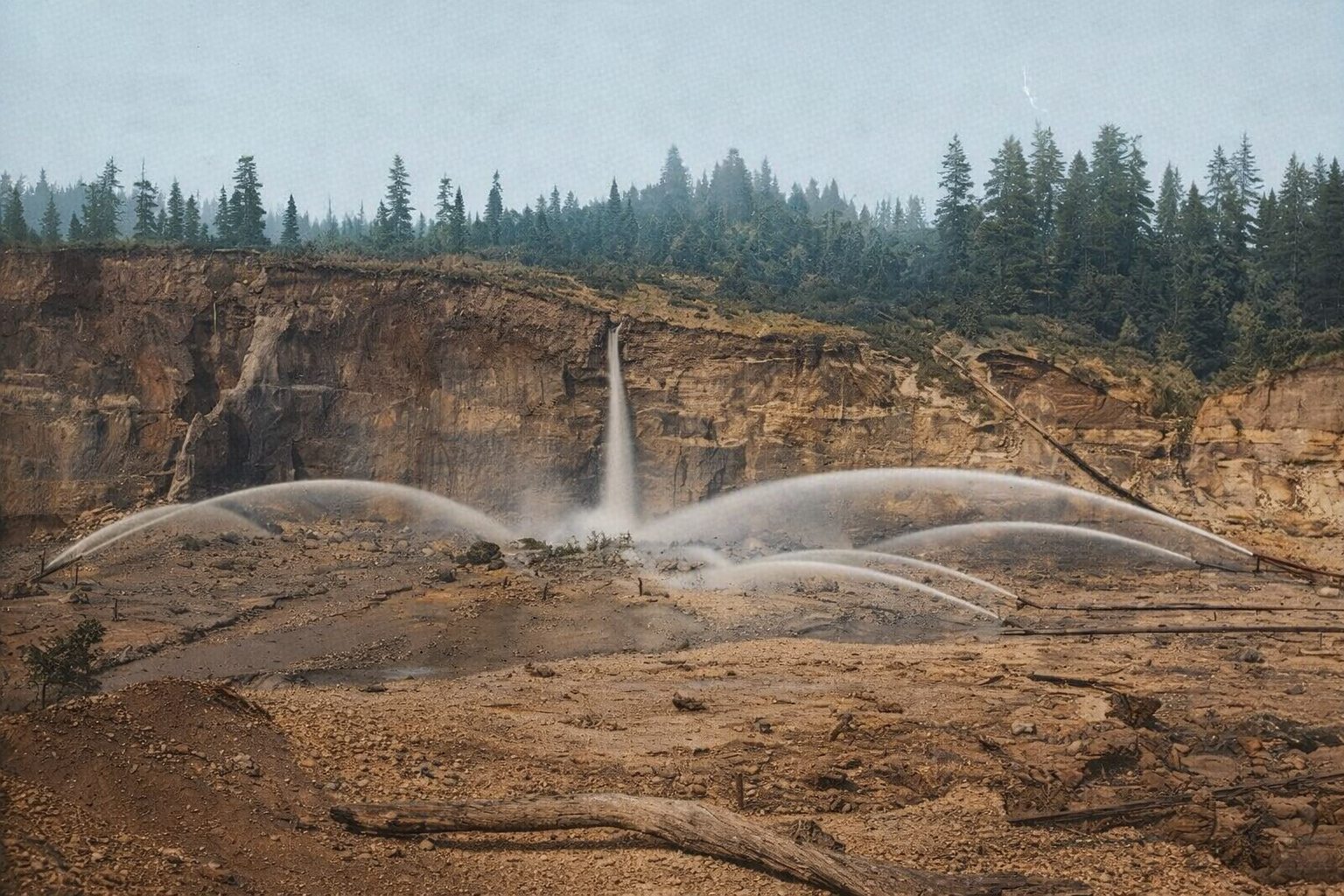
Photo by Carleton E. Watkins
Artist, American, 1829 - 1916; colorized by Kial James
At its peak, the North Bloomfield Mining Company operated some of the largest hydraulic mines in the world. The scale of the operation was enormous — entire mountains were literally washed away.
The environmental damage from hydraulic mining reached far beyond the Sierra foothills. Mining debris choked rivers and buried farmland throughout the Sacramento Valley, especially around Marysville. In 1884, a federal court ruling known as the Sawyer Decision effectively ended hydraulic mining in California.
Today, Malakoff Diggins is preserved as a California State Historic Park, offering one of the most dramatic glimpses into the legacy of the Gold Rush.
📍 Malakoff Diggins State Historic Park
North Bloomfield, Nevada County, California
